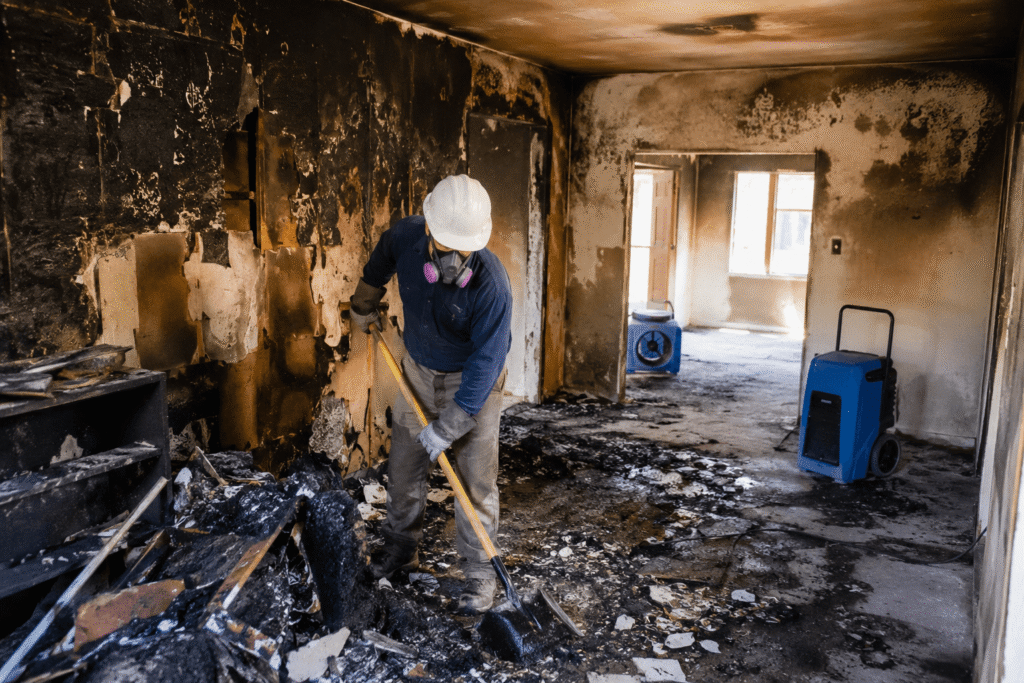
Experiencing a property fire is devastating, but knowing what happens next can bring clarity during a stressful time. Professional fire damage restoration is a systematic, multi-stage process designed to bring a structure back to its pre-loss condition safely and efficiently.
Emergency Assessment and Stabilization
The restoration process begins the moment emergency responders clear the scene. Certified technicians perform a comprehensive evaluation to determine the structural integrity of the building and map out the scope of damage caused by flames, heat, smoke, and water.
Property Security
When structural integrity is compromised, securing the building immediately is vital to prevent looting, vandalism, and further weather-related deterioration. Restoration crews quickly install heavy-duty plywood board-ups over shattered windows and broken doors. They also deploy reinforced tarps across damaged roofing systems. These swift measures protect your remaining belongings from exposure and liability while waiting for full reconstruction.
Insurance Documentation
Navigating insurance claims requires meticulous, verifiable records of every loss sustained during the incident. Certified restoration technicians capture high-resolution photographic and video evidence before any cleanup begins. They generate comprehensive inventory logs detailing damaged structural elements and personal property. This thorough documentation integrates seamlessly with adjuster reports, accelerating claim approvals and ensuring fair compensation.
Water Removal and Structural Drying
Aggressive firefighting efforts inevitably leave behind thousands of gallons of standing water that threaten structural stability. Left unaddressed, trapped moisture triggers rapid mold proliferation within 24 to 48 hours, compounding property damage. Swift water mitigation is critical to protect subfloors, framing, and drywall from permanent warping. Professional technicians deploy advanced extraction and evaporation techniques to restore safe moisture baselines throughout the entire building structure quickly.
Extraction
The initial phase of water mitigation requires rapid extraction to eliminate deep pools of standing water from carpets, subfloors, and hard surfaces. Technicians utilize heavy-duty submersible pumps and industrial truck-mounted extractors capable of pulling thousands of gallons of liquid per hour. Removing surface water instantly halts further saturation, protects structural timber, and prevents deep moisture penetration into foundational materials.
Drying Equipment
Once standing water is removed, residual moisture trapped inside walls, insulation, and subfloors must be evaporated. Restoration crews position high-velocity air movers to accelerate surface evaporation while commercial-grade dehumidifiers extract moisture vapor directly from the indoor air. Technicians continuously monitor relative humidity levels and utilize thermal imaging meters to guarantee every hidden pocket of structural dampness is completely eliminated.
Smoke, Soot, and Residue Remediation
Smoke residue is chemically complex, and treating it incorrectly can permanently stain or ruin porous building materials. Professionals categorize residue as either dry smoke (from fast-burning organic material) or wet smoke (from smoldering synthetics), applying specialized cleaning methods to each.
Dry Soot Sponging
Dry soot sponging is a critical preliminary cleaning technique used before applying any liquids, which could otherwise smear oily residues permanently into porous surfaces. Technicians use specially treated chemical dry-cleaning sponges to gently lift away dry soot from ceilings, walls, and decorative architectural moldings. This specialized friction method safely traps microscopic carbon particles without liquid activation, ensuring delicate paint and wallpaper finishes remain completely protected from permanent staining damage.

HEPA Vacuuming
Once surface residues are cleared, restoration professionals deploy high-efficiency particulate air vacuums to capture fine soot, ash, and toxic particulate matter left behind by the fire. Standard household vacuums typically exhaust microscopic pollutants back into the breathing air, but HEPA systems trap 99.97 percent of particles down to 0.3 microns. This rigorous filtration cleans framing, subfloors, and ventilation entry points thoroughly, preventing hazardous dust redistribution throughout the property.
HVAC Duct Cleaning
Heating, ventilation, and air conditioning networks act as primary highways for circulating toxic smoke odors, soot dust, and ash particles throughout an entire building structure. Running an untreated system will constantly re-contaminate freshly cleaned rooms long after initial remediation finishes. Specialists use powerful negative-air agitation systems and specialized rotary brushes to thoroughly scrub interior duct walls, sanitize the network, and replace filters, guaranteeing pristine indoor air quality during recovery.
Advanced Odor Neutralization
Masking a smoke smell with scents or fragrances is ineffective because odor molecules settle deep within porous materials. Restoration professionals utilize industrial technology to eliminate odors at a molecular level:
Hydroxyl Generators
Hydroxyl generators safely neutralize embedded smoke odors by utilizing ultraviolet light and ambient moisture to produce hydroxyl radicals. These powerful compounds break down molecular odor chains naturally. Because they are safe for occupied environments, technicians can run them continuously while other structural restoration and cleaning tasks are actively underway.
Thermal Foggers
Thermal foggers mimic the exact pathways of smoke by heating a specialized deodorizing liquid into a dense, microscopic vapor. This heated fog expands into tiny crevices, wall cavities, and porous materials where stubborn smoke molecules hide. It neutralizes deep-seated odors at a chemical level rather than simply masking unwanted scents.
Ozone Treatments
Ozone treatments utilize powerful oxidizing gas to destroy severe, pervasive fire odors locked deep inside structural materials. Because high concentrations of ozone gas require vacant properties for safety, technicians carefully seal the workspace during treatment. Once the process completes, the gas safely reverts back into breathable oxygen, leaving interiors fresh.
Contents Cleaning and Pack-Out
Personal belongings, electronics, documents, and furniture often require specialized care. If the home is undergoing major structural repairs, restoration teams execute a "pack-out"—carefully cataloging, packing, and transporting salvageable contents to a secure off-site facility for ultrasonic cleaning, specialized washing, and ozone chamber deodorization.
Structural Repair and Reconstruction
The final phase transforms the remediated, sanitized shell back into a comfortable living or working space. Depending on the severity of the fire, this can range from minor cosmetic repairs to major reconstruction.
Demolition
Severe fire and heat damage often compromise the structural integrity of drywall, insulation, and framing timbers beyond safe repair. During demolition, technicians carefully strip away charred, unsalvageable materials down to the structural studs. This targeted removal eliminates lingering smoke odors at their source, clears away hazardous debris, and prepares the space for safe, code-compliant reconstruction.
Rebuilding
The rebuilding phase transforms your stripped property back into a safe, beautiful, and fully functional space. Skilled contractors reconstruct damaged framing, install fresh insulation, hang new drywall, lay modern flooring, and execute complete electrical or plumbing repairs. Every finishing touch is meticulously applied, ensuring your home or business looks immaculate and feels completely renewed.
Final Inspection
Before handing the keys back over, a rigorous final walkthrough is conducted. Air quality tests, moisture checks, and safety code verifications ensure the property is completely restored, structurally sound, and safe for occupancy.