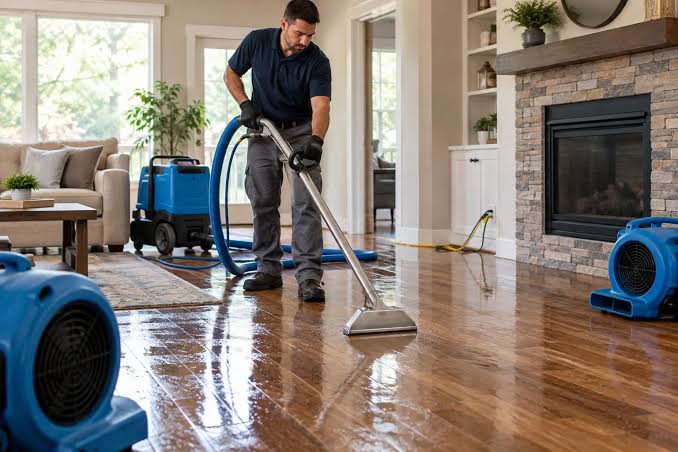
Discovering water damage in your home or business can feel overwhelming. Whether it is caused by a burst pipe, a leaking roof, or a major appliance failure, the immediate instinct is to panic. However, understanding what happens next can bring immense peace of mind.
Water damage restoration is not just about mopping up puddles and running a few fans. It is a meticulous, multi-step engineering and sanitation process designed to return your property to its pre-loss condition safely and permanently.
Here is a complete look at what professional water damage restoration includes from start to finish.
Step 1: Emergency Contact and Rapid Response
The restoration timeline begins the moment you call a certified professional. Because water spreads quickly—saturating drywall, warping subfloors, and encouraging mold growth within 24 to 48 hours—speed is critical. A reputable restoration team will offer 24/7 emergency dispatch to arrive on-site quickly, assess the scope of the disaster, and stop the source of water if it has not already been addressed.
Step 2: Comprehensive Inspection and Damage Assessment
Once on-site, technicians do not just look at the visible puddles. They use advanced diagnostic tools to map out hidden moisture:
Thermal Imaging Cameras
Thermal imaging cameras are essential diagnostic tools used by restoration technicians to detect hidden moisture behind walls, ceilings, and floors. By visualizing temperature differentials, these advanced cameras pinpoint saturated areas that look dry on the surface, ensuring no pocket of trapped water is missed during the initial inspection.
Probing and Non-Probing Moisture Meters
Moisture meters provide precise measurements of water saturation inside building materials. Non-probing meters scan surfaces without causing damage, while probing pins penetrate deep into drywall or subfloors. Together, technicians use these specialized devices to track daily drying progress and verify that your property has reached safe, pre-loss moisture levels.
Step 3: Water Extraction and Removal
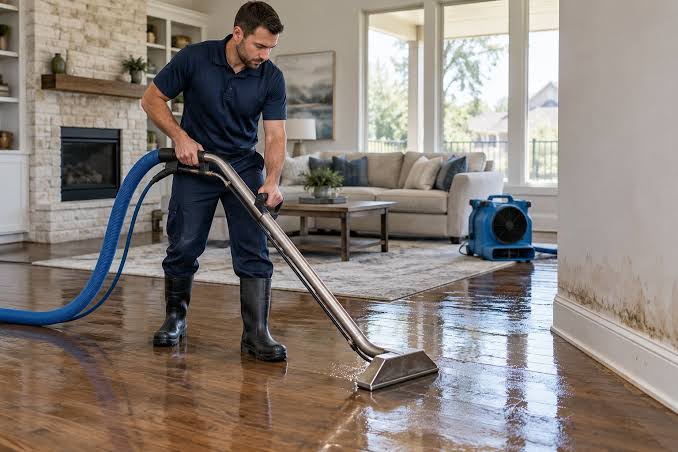
Before any drying can begin, standing water must be physically removed. Technicians deploy high-powered truck-mounted extraction units, industrial submersible pumps, and heavy-duty wet vacuums. Removing thousands of gallons of water rapidly prevents it from seeping further into structural cavities and significantly reduces the total drying time.
Step 4: Specialized Drying and Dehumidification
Even after extraction, building materials like wood, concrete, and drywall retain deep moisture. This is where scientific drying comes into play. Professionals strategically place:
Commercial Air Movers
Commercial air movers are high-velocity fans strategically placed by technicians to accelerate evaporation. By forcing continuous airflow across wet floors, walls, and structural cavities, these powerful units rapidly lift trapped moisture into the air, drastically shortening the overall structural drying time and preventing secondary water damage.
Industrial Dehumidifiers
Industrial dehumidifiers work hand-in-hand with air movers by extracting moisture vapor directly from the indoor air. As air movers push water out of building materials, these heavy-duty units pull the humidity out of the environment, maintaining optimal drying conditions and ensuring deep-seated moisture is safely captured and drained away.
Step 5: Cleaning, Sanitization, and Deodorization
Water damage—especially from appliance overflows, sewage backups, or weather flooding—often introduces bacteria, pathogens, and unpleasant odors. Restoration includes deep cleaning all salvageable surfaces using EPA-registered antimicrobial and anti-fungal treatments. Specialized deodorization equipment, such as hydroxyl generators or ozone machines, is then used to neutralize musty odors at a molecular level rather than just masking them.
Step 6: Mold Prevention and Remediation
Because mold spores thrive in damp environments, prevention is integrated into every phase of the restoration process. If mold colonies have already begun to form, certified technicians implement containment barriers and safely remove contaminated materials using HEPA-filtration systems to protect your indoor air quality.
Step 7: Complete Restoration and Repairs
The final phase transforms your property back into a safe, beautiful space. Depending on the severity of the incident, "restoration" can range from minor cosmetic fixes to major reconstruction:
Replacing ruined drywall, insulation, and baseboards.
Refinishing or replacing warped hardwood floors and subfloors.
Repainting walls and ceilings.
Why Professional Expertise Matters?
Attempting to handle major water damage with household fans and a shop vac often leaves trapped moisture behind, leading to structural rot and severe mold issues down the line. Professional restoration technicians bring the training, insurance compliance, and industrial-grade equipment required to protect your property investment.