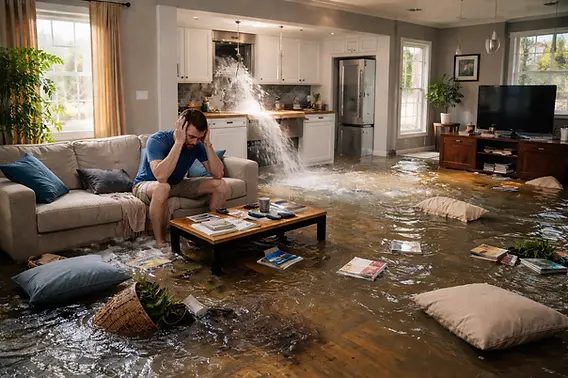
Flood water damage is rarely a single, isolated event; it is a progressive process. When waters recede, the silent degradation of your property begins. Understanding how water impacts your home over days, months, and years is essential for mitigating costly repairs and protecting your investment.
Immediate Effects (0 to 72 Hours)
In the critical first seventy-two hours following a flood, moisture aggressively infiltrates your home’s porous building materials, setting the stage for deep-seated structural issues. During this window, standing water weakens foundations, ruins insulation, and warps wooden frames. Immediate professional extraction and rapid drying are absolutely essential to halt mold colonization and minimize long-term property destruction before it permanently compromises your home.
Structural Saturation
When floodwaters surge, framing wood, drywall, and subflooring rapidly absorb moisture, swelling and warping beyond repair. Drywall instantly loses its structural integrity and begins to crumble, while wooden beams twist and weaken. Without immediate mitigation, this widespread saturation compromises the foundational stability of your entire home, leading to sagging ceilings, buckling floors, and catastrophic structural failure.
Electrical Hazards
Submerged wiring, outlets, appliances, and breaker panels present lethal electrical hazards long after floodwaters retreat. Water corrodes internal components and creates severe shock or fire risks. Never re-energize your electrical system until a licensed electrician inspects and certifies every component. Professional evaluation is vital to ensure your home is safe and prevent hidden short circuits from sparking devastating fires.
Biological Contamination
Floodwaters routinely carry raw sewage, harmful chemicals, and agricultural bacteria into your living space, contaminating every surface on contact. This toxic sludge poses severe health risks to your family and pets. Porous materials like carpets and drywall must be completely discarded. Professional sanitization, heavy-duty disinfection, and protective gear are strictly required to safely handle and eliminate these dangerous biological pathogens from your property.
Medium-Term Effects (Weeks to Months)
If moisture is not professionally extracted and thoroughly dried using industrial-grade equipment, secondary damage takes hold rapidly over the following weeks and months. Hidden water pockets fester inside wall cavities and subfloors, accelerating structural decay. During this critical window, unchecked humidity fosters aggressive mold growth, compromises structural framing, and silently ruins your property's integrity long after the initial floodwaters have completely receded from your home.

Mold Proliferation
Mold spores germinate within twenty-four to forty-eight hours on damp, organic surfaces, rapidly colonizing invisibly behind walls, beneath subfloors, and inside HVAC ducts. As these colonies spread, they release millions of microscopic spores into the indoor air, creating hazardous living conditions. Left unmitigated, widespread mold infestation destroys building materials, requires expensive remediation, and poses severe respiratory health risks to every occupant in the home.
Wood Rot and Delamination
Trapped moisture relentlessly breaks down organic wood fibers, causing fungal decay, sagging subfloors, and structural weakening. Simultaneously, laminated materials like plywood and engineered beams experience severe delamination as their adhesives dissolve under prolonged dampness. This silent degradation compromises load-bearing walls and floor joists, threatening the overall architectural safety of your property and demanding costly structural reconstruction if left unaddressed.
Corrosion and Rust
Metal fasteners, nails, framing brackets, electrical connections, and HVAC components begin to corrode and rust within weeks of continuous moisture exposure. As structural hardware and metal joints oxidize, they lose their tensile strength and structural integrity. This hidden corrosion weakens the overall framework of your home, potentially causing fasteners to snap, joints to loosen, and expensive mechanical systems to fail prematurely across the affected areas.
Long-Term Effects (Years)
Unresolved or poorly remediated water damage creates chronic structural instability and severe health hazards that persist for years after a flood. Over extended periods, lingering hidden moisture compromises foundational integrity, encourages persistent indoor pollution, and silently erodes your home's financial equity. Addressing these cumulative consequences requires extensive structural overhauls, major capital investments, and continuous monitoring to ensure your property remains safe, habitable, and structurally sound for future occupants.
Foundation Compromise
Prolonged soil saturation and extreme hydrostatic pressure exert immense force against foundation walls, causing major cracks, shifting, and uneven settling. Left unaddressed, this severe foundational damage alters your home's load-bearing capacity, leading to misaligned doors, warped windows, and astronomically expensive structural repairs that threaten the entire stability of the building.
Chronic Indoor Air Quality Issues
Hidden mold colonies and trapped dampness continuously release toxic spores and mycotoxins into your indoor air supply. This chronic contamination triggers persistent respiratory illnesses, severe allergies, and long-term health complications for residents, turning your living space into a hazardous environment that requires professional remediation and continuous air filtration systems.
Diminished Property Value
Cumulative structural decay, peeling finishes, and mandatory legal disclosures regarding past flooding drastically reduce the marketability and resale value of your home. Potential buyers often shy away from properties with histories of severe water damage, forcing sellers to accept significantly lower offers or invest heavily in expensive pre-sale renovations.
Essential Mitigation Strategies
Executing immediate mitigation strategies is crucial to halting the progressive degradation of your property after a flood. By deploying rapid water extraction, advanced thermal inspections, and strategic exterior drainage improvements, you can successfully prevent hidden moisture pockets from turning into expensive, long-term structural disasters. Taking prompt, professional action saves your home from catastrophic mold growth, protects your foundational integrity, and drastically minimizes overall property repair costs over time.
Rapid Extraction
Initiate water removal and commercial drying within twenty-four to forty-eight hours to halt mold colonization in its tracks. Powerful truck-mounted extractors and heavy-duty air movers pull trapped moisture from carpets, subfloors, and wall cavities before it can warp wood or ruin drywall. Speed is your greatest ally in preventing extensive secondary water damage across the entire property.
Thermal Imaging Inspections
Utilize certified restoration professionals equipped with infrared cameras and sensitive moisture meters to locate hidden water pockets trapped behind walls and beneath flooring. Standard visual inspections often miss residual moisture, but thermal imaging detects temperature differentials caused by damp materials, ensuring every single wet zone is accurately identified and thoroughly dried.
Exterior Drainage Improvements
Install professional exterior solutions like French drains, heavy-duty sump pumps, and properly sloped soil grading to safely direct rainwater and future floodwaters away from your foundation. Improving your property's exterior drainage prevents hydrostatic pressure from building up against basement walls, ensuring your home stays permanently protected against recurring water infiltration and expensive structural shifting.
Final Thoughts
Flood water damage is a progressive threat that intensifies over time, impacting everything from structural integrity to indoor air quality. By understanding these risks and acting swiftly with rapid extraction, thorough inspections, and proper drainage, you can protect your property from long-term decay, safeguard your family's health, and preserve your home's value.