
Nestled between the Swan Range and Flathead Lake, Bigfork, Montana, offers some of the most stunning landscapes in the Pacific Northwest. However, the same local geology that makes our region beautiful—rich in granite and shale—also makes it a high-risk area for radon gas.
According to the EPA, Lake County is classified as a Zone 1 area, meaning homes here have a high potential for radon levels exceeding 4.0 pCi/L. If you’ve recently tested your home and discovered elevated levels, you’re likely wondering: How does a mitigation system actually fix this?
In this blog, we’ll break down the mechanics of radon mitigation specifically for the types of homes found in the Bigfork area.
What is Radon Mitigation?
Radon mitigation is any process used to reduce radon gas concentrations in the air of a building. Since radon is pulled into your home by vacuum pressure (the home acts like a giant vacuum sucking gas out of the soil), a mitigation system works by reversing that pressure relationship.
The Mechanics: How the System Works
Most homes in Bigfork utilize Active Soil Depressurization (ASD). This is considered the "Gold Standard" of radon reduction. Here is the step-by-step process of how it functions:
1. The Suction Pit (The "Collection Point")
The process begins by creating a "suction pit" beneath your home’s concrete slab. A technician drills a small hole through the floor and removes several gallons of soil or gravel. This creates a specialized void where radon gas can naturally congregate. By establishing this low-pressure collection point, the system ensures that gas is diverted toward the pipe rather than seeping through foundation cracks into your living spaces.
2. The PVC Vent Pipe
Once the collection point is ready, a heavy-duty PVC vent pipe is inserted and airtight-sealed into the slab. This pipe serves as the dedicated highway for radon gas. In Montana homes, these pipes are routed strategically—either through interior closets to stay hidden or along the exterior wall—to reach a point above the roofline. Proper sealing at the base is critical to maintain the vacuum pressure required for mitigation.
3. The Radon Fan
The radon fan is the heart of the system, designed to run 24/7 with minimal energy consumption. Unlike standard ventilation, this fan is airtight and weatherized. It is always installed in an unconditioned space, such as an attic or an exterior mount, to prevent any leaked gas from entering the home. The fan creates the continuous "negative pressure" that pulls radon upward from the soil and safely away from your family.
Note: To meet safety codes, the fan must be located in an unconditioned space, such as an attic, a garage with no living space above it, or on the home's exterior.
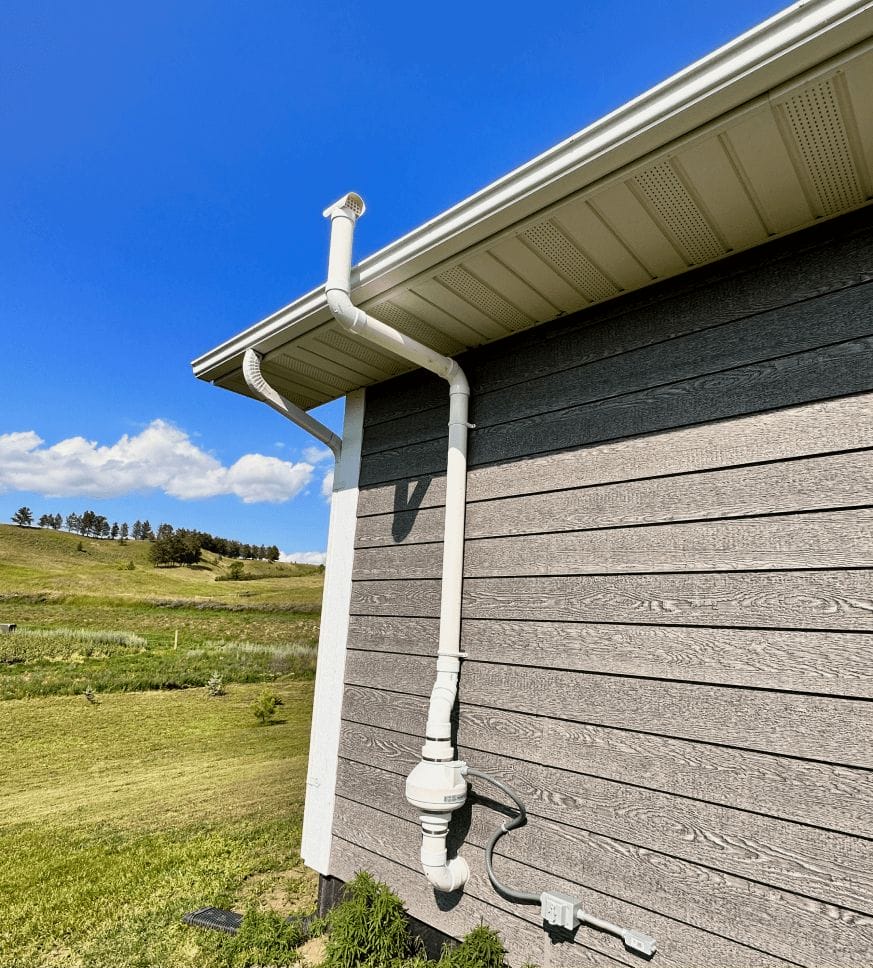
4. The Discharge Point
The final stage is the discharge point, located safely above the eave of your roof. National safety standards require the gas to be released at an elevation where it cannot re-enter the home through windows or vents. Once the concentrated radon hits the open Bigfork air, it quickly dilutes to harmless levels. This vertical discharge ensures that the "vacuum" cycle is completed safely, far above the reach of occupants.
Common System Types for Bigfork Architecture
Bigfork homes range from modern builds on the lake to older cabins in the woods. The type of system you need depends on your foundation:
Sub-Slab Suction
Sub-slab suction is the most common radon mitigation method for Bigfork homes built on a concrete slab or a full basement. A technician drills one or more "suction holes" through the concrete floor to reach the soil beneath. By inserting a PVC pipe and applying vacuum pressure with a specialized fan, the system creates a low-pressure zone under the entire slab. This effectively intercepts radon gas before it can enter the home through foundation cracks or construction joints, venting it safely outdoors.
Sub-Membrane Suction
Many homes in the Flathead Valley are built over dirt-floor crawl spaces, which are significant sources of radon entry. Sub-membrane suction involves covering the entire earth floor with a high-density, reinforced plastic liner. This membrane is air-tightly sealed to the foundation walls and support piers. A suction pipe is then installed beneath the plastic "envelope." The fan pulls radon gas from the soil under the liner, maintaining a permanent vacuum that prevents gas from rising into the living areas above.
Sump-Hole Suction
If your Bigfork home already utilizes a sump pump to manage high water tables near the lake, it can often be integrated into the radon system. Sump-hole suction involves installing a specialized, airtight cover over the existing sump pit. The radon vent pipe is then connected directly to this cover. This dual-purpose setup allows the sump pump to continue removing water while the radon fan simultaneously pulls soil gases out of the pit, providing an efficient and cost-effective mitigation solution.
How Do You Know It’s Working?
Every active system includes a U-Tube Manometer—a small, clear gauge filled with colored liquid located on the vent pipe.
If the liquid levels are uneven, the fan is creating suction (Good!).
If the liquid levels are level/zeroed out, the fan has failed or lost power (Time for a repair).
Final Thoughts
Protecting your Bigfork home from radon is a vital step for your family’s long-term health and your property’s resale value. By understanding how these mitigation systems redirect soil gases safely above your roofline, you can breathe easier knowing your indoor air quality is monitored and controlled. Don't leave your safety to chance in High-Risk Zone 1; professional testing and a custom-installed system are the only proven ways to guarantee peace of mind.